The New Frontier of Global Education: Why Language Immersion in Guatemala Is the Smartest Academic Investment of the 21st Century
Abstract
In an increasingly digital world, where artificial intelligence applications promise instant translation and language learning through screens, a fundamental question emerges for modern students, rising professionals, and academic directors: Is studying abroad still relevant?
This article argues that not only does study abroad remain relevant, but its value has fundamentally shifted—from travel to transformation. Through an analysis of Guatemala as an emerging educational hub, and specifically the pedagogical model of Celas Maya, this paper demonstrates how immersive language learning—when combined with academic rigor, personalized instruction, and cultural integration—constitutes one of the most effective strategies for linguistic and cognitive development in the contemporary global landscape.
I. Introduction: From Travel to Transformation
In the past, studying abroad was often perceived as a complementary experience—an enhancement to academic life. Today, however, the stakes have changed.
Bilingualism is no longer a “plus” on a résumé; it is a critical cognitive and cultural competency required to navigate the complexity of global markets. Yet, not all immersion programs are created equal.
While traditional destinations in Europe have increasingly become saturated with tourism, Guatemala—particularly the cultural city of Quetzaltenango—has emerged as a premium destination for those seeking both academic excellence and authentic human experience.
The relevance of study abroad, therefore, no longer lies in the act of traveling, but in the depth of transformation experienced by the individual.
II. The Renaissance of Guatemala as an Educational Hub
Historical Context and Modern Evolution
Guatemala has long been recognized as the heart of the Mayan world. However, over the past four decades, a significant transformation has occurred: the country has evolved into a center of elite language training.
This evolution is not accidental—it is the result of a unique convergence of cultural authenticity, economic accessibility, and educational innovation.
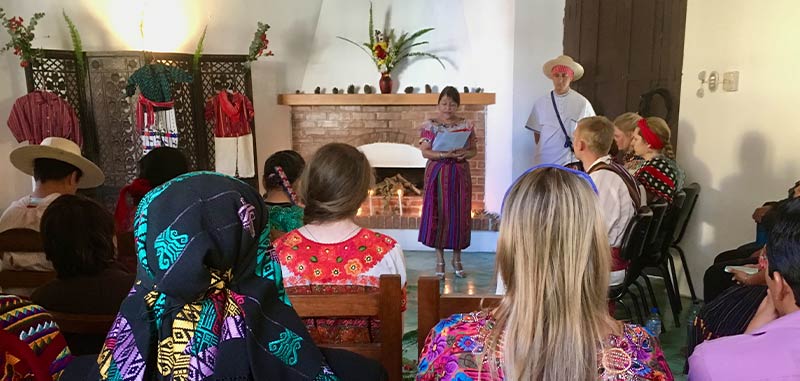
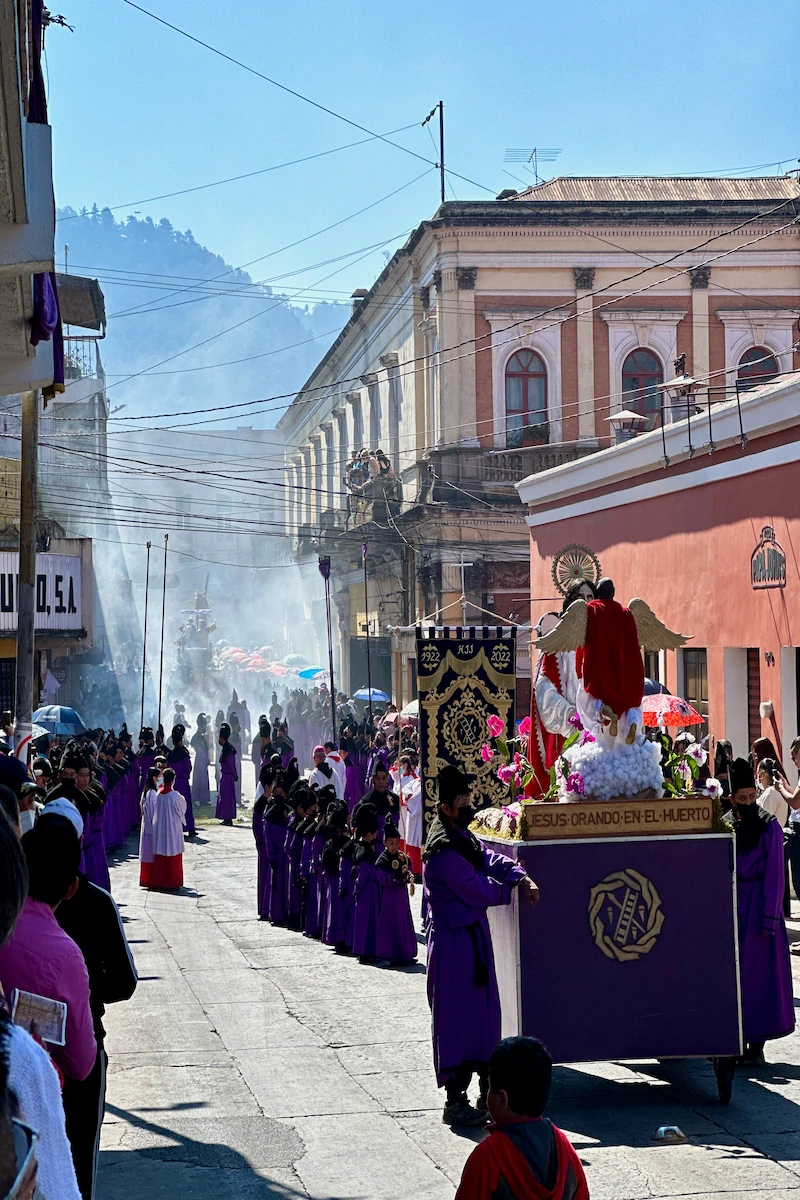
The Phenomenon of Quetzaltenango (Xela)
Unlike Guatemala City or Antigua—both heavily influenced by tourism—Quetzaltenango (Xela) offers a distinct educational ecosystem.
As a university city, Xela provides:
- a slower, more immersive rhythm of life
- deeper integration into local communities
- reduced exposure to “tourist bubbles”
This absence of artificial environments forces students to operate continuously in Spanish, accelerating neurological adaptation and fluency.
Studying in Xela is not a vacation—it is an intellectual retreat.
Cost Comparison: The Luxury of Personalization
In cities such as Madrid, Barcelona, or San José (Costa Rica), high operational costs often lead institutions to adopt large group class models.
In contrast, Guatemala enables what would be considered a luxury elsewhere:
👉 One-on-one instruction at scale
This model offers three critical advantages:
1. Intelligent Affordability
Lower operational costs allow for greater investment in human capital—namely, highly qualified instructors.
2. Time Optimization
In traditional group classes (e.g., 10 students), individual speaking time is limited to less than 25%.
In contrast, one-on-one instruction enables students to actively engage in up to 75% of the session.
3. Budget Impact
A semester in Guatemala can cost approximately 40% less than in Europe, allowing for extended immersion and stronger fluency outcomes.
III. Celas Maya: Where Pedagogy Meets Neuroscience
Learning Style Diagnostics: A Personalized Approach
Most language institutions rely on standardized teaching models. Celas Maya disrupts this paradigm through an initial psychopedagogical evaluation that identifies each student’s learning style:
- Visual learners: benefit from structured grammar maps and visual tools
- Auditory learners: focus on prosody and rhythm, particularly within Guatemalan Spanish—widely regarded as one of the clearest and most neutral forms of the language
- Kinesthetic learners: engage through action-based experiences such as cooking workshops, volcanic hikes, and community projects
This diagnostic system ensures that learning is not only efficient, but deeply aligned with individual cognitive processes.
The 75/25 Methodology
At the core of Celas Maya’s approach lies the 75/25 methodology.
Grounded in language acquisition neuroscience, this model recognizes that active production (speaking) is essential for forming durable neural connections.
By structuring sessions so that students actively participate 75% of the time, passive learning is replaced with high-intensity linguistic training.
IV. Academic Rigor and Global Recognition
University Partnerships and Transferable Credits
A premium academic program must provide institutional validation.
Celas Maya has established a strategic partnership with Westminster University, enabling students to:
- earn transferable university credits
- receive official academic transcripts
- integrate immersion programs into their degree pathways
This is particularly critical for:
- undergraduate students requiring credit recognition
- universities seeking academically reliable partners
Certification Pathways: DELE and SIELE
In today’s global job market, self-reported language proficiency is insufficient.
Celas Maya prepares students for internationally recognized certifications:
- DELE
- SIELE
These credentials:
- provide permanent validation of proficiency
- are recognized by governments and multinational corporations
- enhance both academic and professional profiles
V. Total Immersion: The Psychology of the Homestay Experience
Language immersion is not merely linguistic—it is anthropological.
The Home as a Linguistic Laboratory
Living with a Guatemalan host family transforms daily life into continuous learning:
- discussing current events over traditional meals such as pepián or tamales
- engaging in cultural practices
- developing emotional and social bonds
Cultural Empathy and Emotional Safety
Host families provide:
- a framework for cultural understanding
- a space for emotional security
- an environment where students feel safe making mistakes
This emotional safety is essential for language acquisition, as it fosters confidence and risk-taking—key components of fluency.
VI. Artificial Intelligence vs. Human Experience
In 2026, artificial intelligence has become ubiquitous in language learning.
This raises a critical question:
👉 Why travel when you have an app?
The answer lies in the limits of technology.
AI can provide:
- vocabulary
- grammar corrections
- instant translations
However, it cannot replicate:
- emotional context
- cultural nuance
- spontaneous human interaction
Fluency is not purely linguistic—it is 80% confidence and 20% vocabulary.
Confidence emerges only through real-world interaction, where uncertainty, humor, and human connection shape the learning process.
VII. Conclusion: Your Future Begins in the Heart of Central America
Studying abroad in Guatemala through Celas Maya is not a passive educational experience—it is a strategic life decision.
It offers:
- linguistic mastery
- cultural depth
- academic credibility
- personal transformation
In this context, Guatemala is not simply a destination—it is a catalyst.
Final Reflection
For students ready to redefine their trajectory, and for academic institutions seeking partners that elevate educational standards, the opportunity is clear.
The question is no longer whether to learn Spanish.
👉 The question is: